Mexico is an important barite producer in North America, with mining areas mainly distributed in Nuevo Leon, Sonora, and Chihuahua states, with medium-to-high grade raw ore and low impurities. At the same time, Mexico, relying on the tariff advantages of the United States-Mexico-Canada Agreement (USMCA), has become an important destination for the global plastics manufacturing industry transfer. Cities such as Monterrey and Guadalajara have gathered a large number of plastic pipe, automotive plastic parts, and packaging material manufacturers, with strong demand for high-quality functional fillers.
However, Mexico's local barite processing has long been limited to coarse powder, and plastic-grade ultra-fine modified powder is almost entirely imported from the United States and China, with high prices and long delivery cycles. A local mining and chemical group decided to invest in building a plastic filler grade barite powder deep processing production line. After comparing various process schemes, it finally selected the ultra-fine grinding + surface modification integrated process, completing grinding and modification in the same equipment, greatly reducing investment and energy consumption. The project aims to replace imported powder, meet the demand of the plastics industry in Mexico and the southwestern United States, and expand North American market share with the zero-tariff advantage of USMCA.
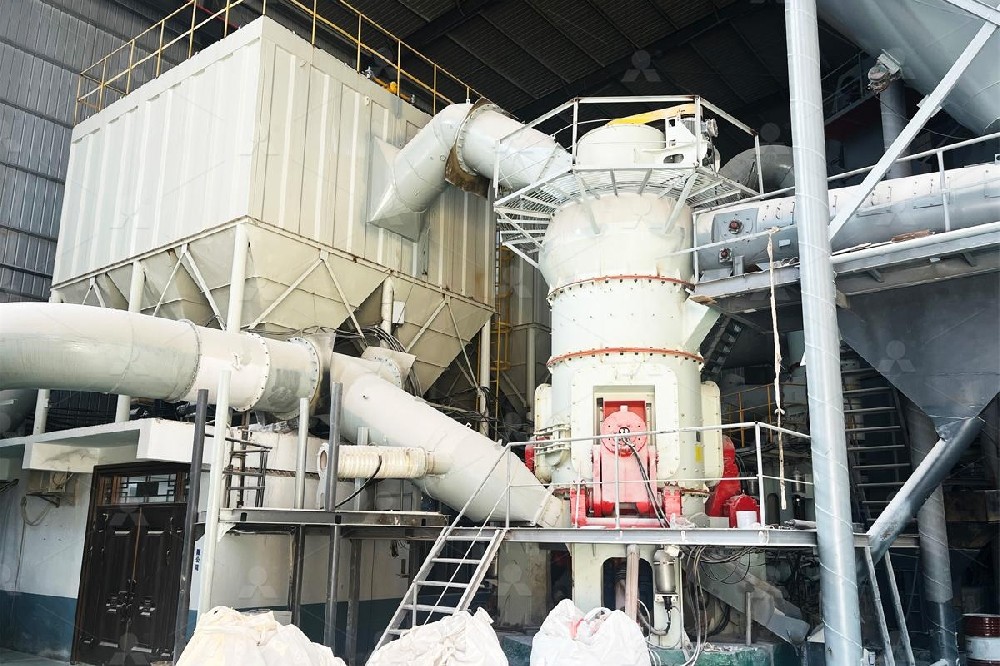
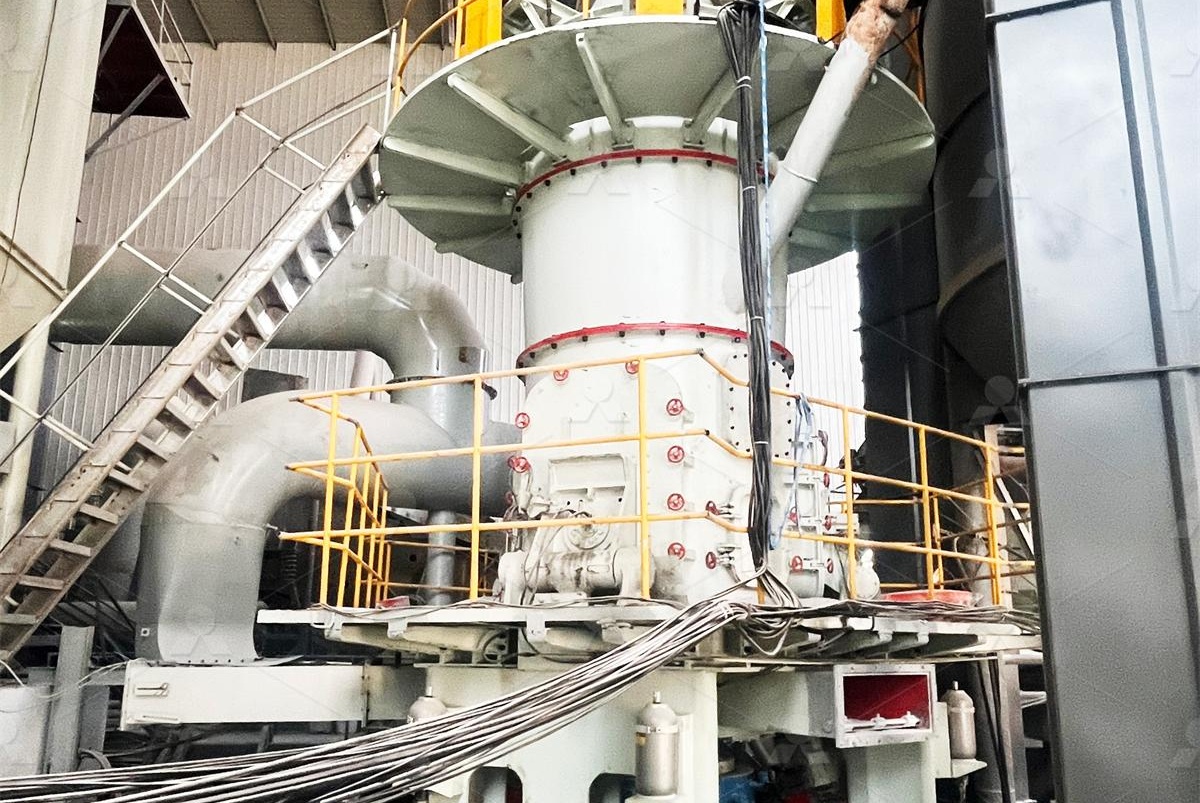
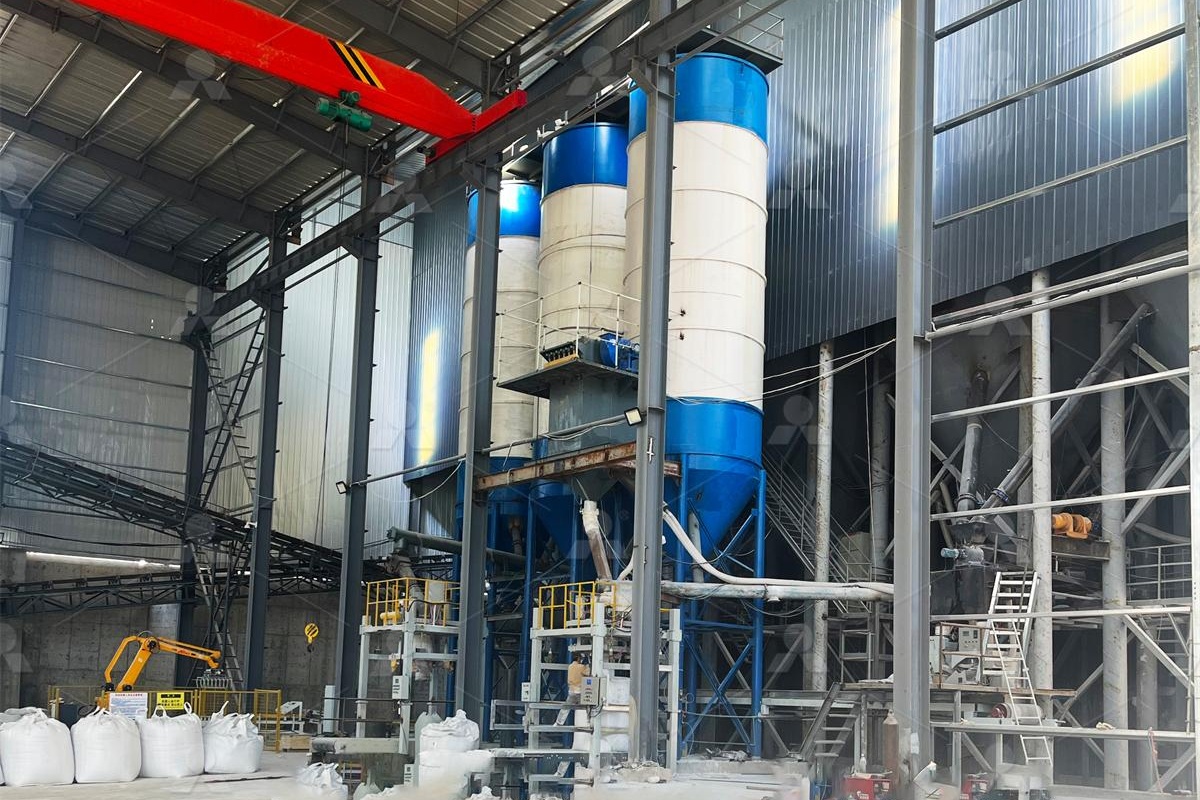
Based on the strict requirements of plastic filler grade products for fineness, purity, and surface activity, a grinding-modification integrated production line is configured. The core equipment is as follows:
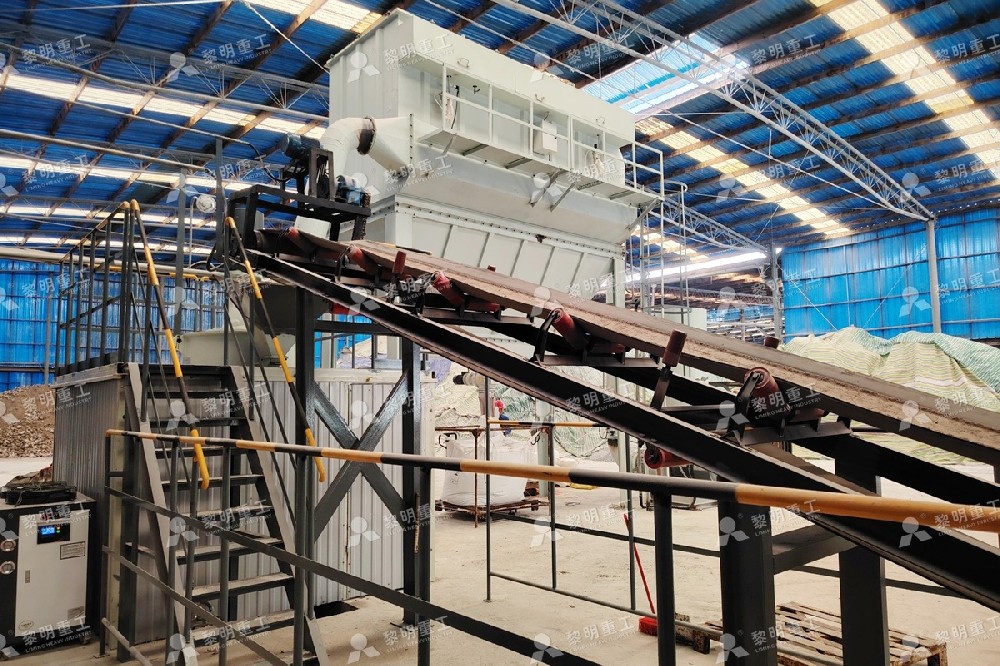
European version impact crusher, for medium-fine crushing of medium-hard barite ore, crushing 0-30mm raw ore to 3-8mm, with cubic product particle shape and low needle-flake content, conducive to subsequent ultra-fine grinding and surface coating.
Fully sealed bucket elevator, no material spillage and no dust overflow during material lifting, adapted to the dry and windy climate conditions in Mexico, ensuring a clean factory environment.
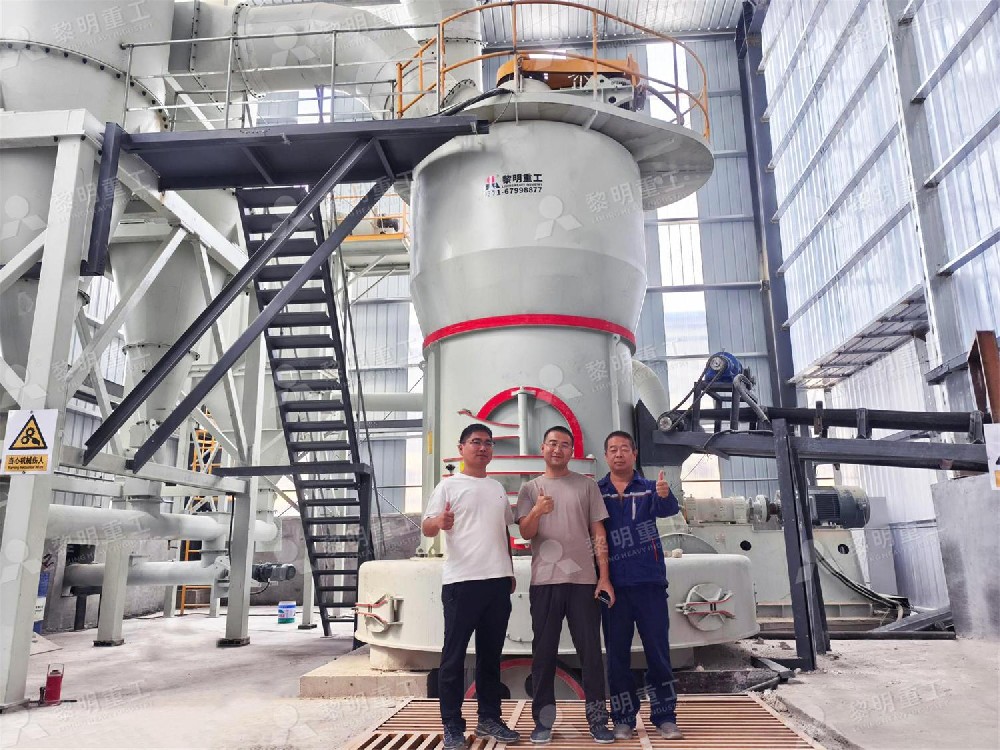
Core equipment, integrating ultra-fine grinding and surface modification functions. The material is pulverized to 800-1250 mesh ultra-fine powder in the grinding chamber, while the modifier is automatically sprayed into the grinding chamber through the dosing system, completing surface coating under the heat generated by grinding and mechanical force, producing activated barite powder in one step.
Variable frequency high-precision turbine classifier, high classification accuracy, 800-1250 mesh finished product D97 pass rate ≥97%, narrow particle size distribution, ensuring uniform dispersion and no agglomeration in plastic filling.
High-precision loss-in-weight metering pump, can automatically adjust modifier addition amount (0.3-1.5% adjustable) according to output, atomized and sprayed into the grinding chamber, ensuring uniform coating and no waste.
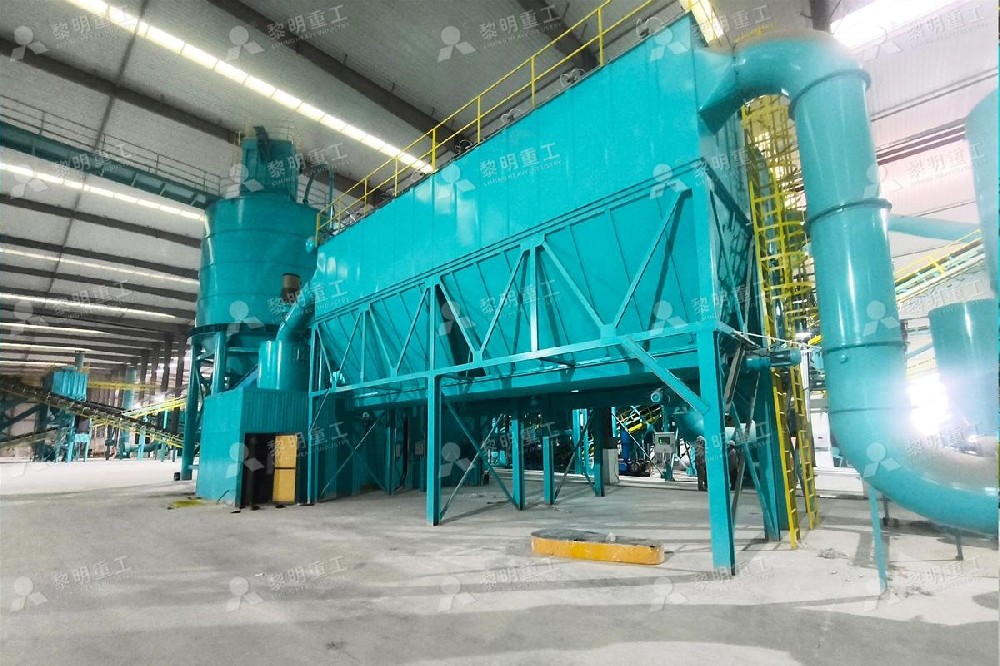
Anti-static membrane filter material dust collector, optimized ash cleaning program for the adhesiveness of modified powder, collection rate up to 99.9%, emission concentration below 10mg/m³.
Modified powder has high temperature, equipped with screw cooling conveyor to cool the finished product to below 40°C, then sent to the fully automatic packaging machine, avoiding modifier migration and precipitation after packaging, ensuring product storage stability.
The project adopts a grinding-modification integrated fully dry process, with grinding and surface modification completed simultaneously, simple flow and low energy consumption. The specific process is as follows:
Barite ore mined in the Nuevo Leon mining area is transported to the factory raw material pile by dump truck, fed into the raw material bin by loader, and uniformly fed into the CI5X impact crusher by vibrating feeder, crushed to 3-8mm uniform particle size.
Crushed material is screened by vibrating screen to remove mixed soil and waste rock. Qualified material enters the pre-grinding bin, and oversize material returns to the crusher for re-crushing.
Qualified material is quantitatively fed into the LUM ultra-fine vertical mill by screw conveyor, pulverized to 800-1250 mesh ultra-fine powder under the rolling and shearing action of grinding rollers and rings. At the same time, the modifier automatic metering system atomizes and sprays stearic acid or silane coupling agent into the grinding chamber. Using the friction heat (80-120°C) and mechanochemical action generated by grinding, the modifier is uniformly coated on the powder surface, completing grinding and modification in one step.
Ground and modified powder enters the turbine classifier with the airflow. Qualified fine powder passes through the classifier wheel and enters the collection system, while unqualified coarse powder falls back to the grinding chamber for continued grinding and modification.
Qualified modified barite powder is collected in two stages by cyclone collector and pulse dust collector, with collection rate up to 99.9%. Clean air is discharged up to standard.
Collected high-temperature powder is cooled to below 40°C by screw cooling conveyor, sent to the finished product bin, and packaged by fully automatic valve port packaging machine as 25kg/bag or 1 ton/bag, warehoused or directly delivered to customers.
It is the first barite deep processing production line in Mexico and even North America integrating ultra-fine grinding and surface modification, producing activated barite powder in one step, with advanced technology and simple flow.
Modified barite powder produced in Mexico exports to the United States and Canada enjoy zero-tariff treatment under USMCA. Compared with imports from China, it can save 5-10% tariffs and 20-30 days of sea freight time, having significant price and delivery advantages in the North American market.
In-situ modification using grinding friction heat and mechanochemical action, modifier coating rate ≥95%, activation degree ≥98%, powder has good compatibility with PP, PE, PVC and other plastic matrices, uniform dispersion, filling amount can be increased by 20-30%.
Traditional process requires ultra-fine grinding first, then separate heating modification. The two-step process has high energy consumption and large investment. This project's grinding-modification integrated process is completed in the same equipment, unit product energy consumption reduced by more than 35%, investment saved by 40%.
The project is located in Monterrey, only over 200 kilometers from the US Texas border, surrounded by a large number of plastic pipe and automotive plastic parts manufacturers, can achieve same-day or next-day delivery, with fast logistics response.
By changing modifier types (stearic acid, silane, titanate, etc.), can produce functional fillers adapted to different plastic systems, meeting various application needs such as PVC pipes, PP automotive parts, PE films, with high product added value.
Barite powder is an inorganic polar material with poor compatibility with non-polar plastic matrices such as PP, PE, and PVC. Direct filling can easily cause agglomeration and uneven dispersion, leading to decreased mechanical properties of plastic products. After surface modification with stearic acid or silane coupling agent, the powder surface changes from hydrophilic to oleophilic, compatibility with plastic matrices is greatly improved, dispersion is more uniform, filling amount can be increased by 20-30%, while improving processing fluidity and surface finish of plastic products.
Grinding-modification integration has obvious advantages. The two-step method requires ultra-fine grinding first, then separate heating and stirring modification, with large equipment investment, large floor space, and high energy consumption (requires additional heating), and agglomeration is prone to occur during modification. The grinding-modification integrated process performs in-situ modification using grinding friction heat during the grinding process, completed in one step, investment saved by 40%, energy consumption reduced by 35%, floor space reduced by 50%, and modification is uniform without agglomeration. It is currently the most advanced process route.
There are significant advantages. According to the United States-Mexico-Canada Agreement (USMCA), industrial mineral products of Mexican origin export to the United States and Canada enjoy zero-tariff treatment. Compared with importing modified barite powder from China (which needs to pay 3-5% most-favored-nation tariffs and was once subject to additional tariffs), Mexican products can save 5-10% tariff costs, and sea/land transportation time is shortened from 25-35 days to 2-5 days, having extremely strong price and delivery competitiveness in the North American market.
Choose according to the downstream plastic system: PVC pipes and profiles commonly use stearic acid modification (addition amount 0.5-1.0%), low cost and good effect; PP, PE automotive parts and engineering plastics commonly use silane coupling agent modification (addition amount 0.3-0.8%), good temperature resistance and strong interface bonding force; high-end nylon, ABS, etc. can use titanate coupling agent. This project is equipped with a high-precision automatic metering system, addition amount 0.3-1.5% stepless adjustable, can flexibly switch according to different product formulas.
Under correct storage conditions, the shelf life is 12 months. Stearic acid modified powder is stable when stored at temperatures below 40°C in a dry and ventilated place, and will not deteriorate. This project is equipped with a finished product cooling system, cooling the powder to below 40°C before packaging, avoiding modifier migration and precipitation after high-temperature packaging. It is recommended that customers store in a dry and ventilated warehouse, avoiding direct sunlight and humid environments.
Yes. The grinding-modification integrated machine supports two modes: when the modifier adding system is turned on, it produces modified activated powder; when the adding system is turned off, it can produce ordinary unmodified ultra-fine powder. Fineness can be steplessly adjusted within 400-1250 mesh, can flexibly switch product types according to order needs, one machine with multiple uses, maximizing equipment utilization.
Mexico's industrial electricity price is about 0.08-0.10 USD/kWh, comparable to China and lower than the United States (0.12-0.15 USD/kWh), and this project's grinding-modification integrated process has low energy consumption, with electricity costs accounting for less than 15% of production costs. In terms of labor, Mexico's manufacturing average wage is about 1/4-1/3 of that in the United States, and this production line has a high degree of automation, requiring only 3-4 people to operate, with low labor costs. Overall, Mexico's production of modified barite powder has strong cost competitiveness in the North American market.