Chromite Grinding Mill
Chromite (FeCr₂O₄) is the sole industrial ore mineral for chromium. It appears iron-black to brownish-black in color, has a Mohs hardness of 5.5–6.5, and a density of 4.0–4.8 g/cm³. It is a critical strategic mineral that underpins modern industry: approximately 85% of it is used to smelt ferrochromium alloys, which are subsequently employed to produce stainless steel (containing 10.5%–30% chromium), imparting both corrosion resistance and luster to the metal. The remainder is widely utilized in the production of refractory materials (such as chrome-magnesite bricks), foundry sands, and as a raw material for chromium-based chemical products.

Applications
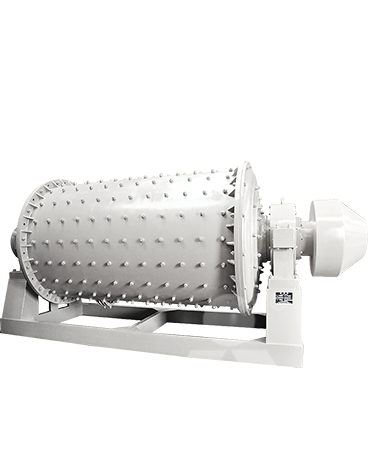
The iron ore grinding process is generally categorized into three types: coarse powder processing (0–3 mm), fine powder processing (20–400 mesh), and ultrafine powder processing (400–3250 mesh). The specific production process required varies depending on the material, the desired output, and the intended application; therefore, a flexible approach is necessary. For further details, please consult our online customer service.
Large chunks of iron ore are crushed by a crusher until they reach a fineness (15mm–50mm) suitable for feeding into a grinding mill.
The crushed iron ore fragments are transported via an elevator to a storage hopper, from which they are fed uniformly and at a controlled rate into the grinding chamber of the mill.
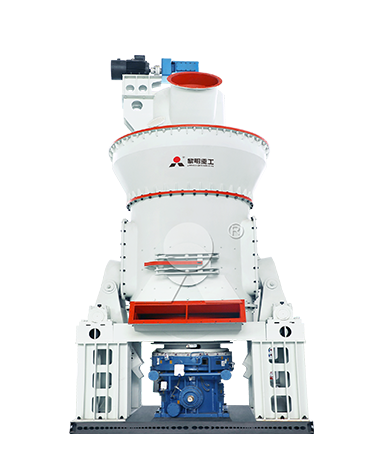
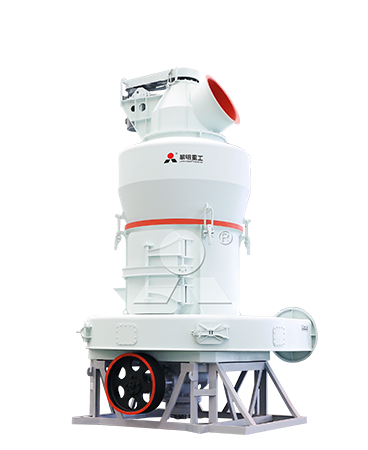
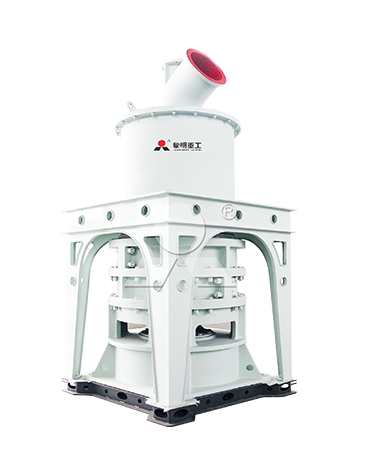
For fine powder production, equipment such as the LM Vertical Roller Mill, MTW European-style Mill, or 5X European-style Intelligent Mill is typically used. For ultra-fine powder, the LUM Ultrafine Vertical Mill or MW Ring-Roller Ultrafine Mill is preferred. For coarse powder, options include the CM European-style Coarse Powder Mill or a direct-flow centrifugal mill.
The ground material is processed through a powder classifier (separator). Particles that do not meet the required fineness are separated out and returned to the main mill for further grinding.
Particles that meet the required fineness are carried by an airflow through ducts into a dust collector, where they are separated and gathered. The collected finished powder is then transported from the discharge outlet to a finished-product silo, from where it is either loaded into bulk tanker trucks or processed through an automatic bagging machine.